
10 Provocative Psychological Lessons for 2025
But make sure to read the rest of my 156 articles published this year.
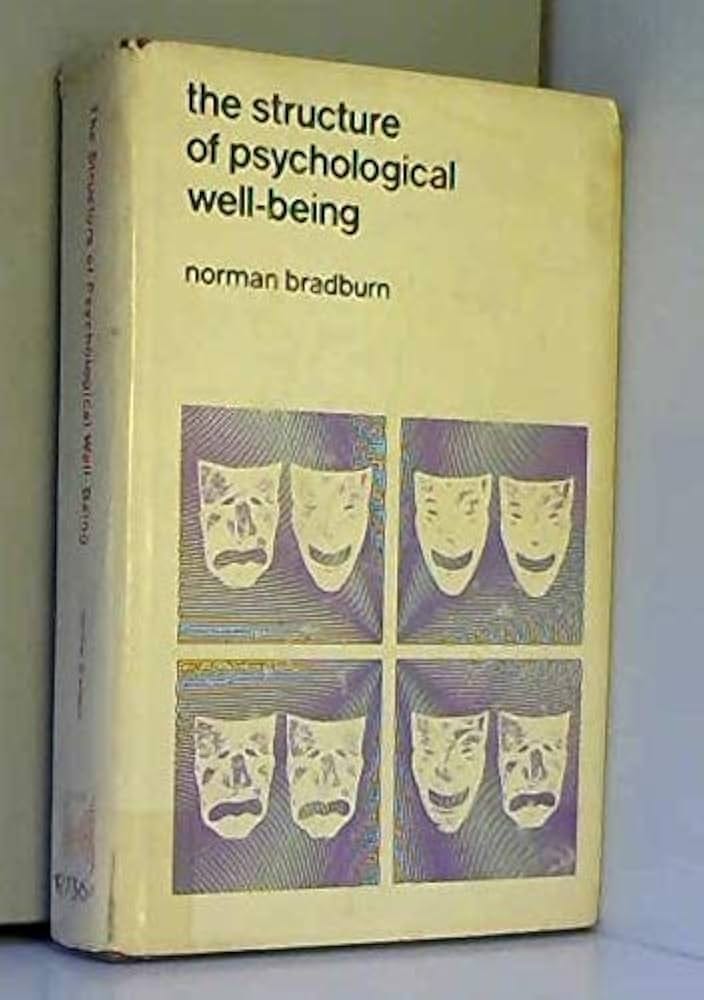
Well-being wasn’t always a “science.” For most of history, it was a desperate, flickering candle in a very dark room. You have the groundbreaking, underappreciated work of Norman Bradburn in 1969 with his monograph, The Structure of Psychological Well-Being
Then came 1984. While Orwell was busy predicting a dystopian nightmare, two titans of the mind, Ed Diener and Ruut Veenhoven (link), decided to stop speculating and start measuring. In a bizarre cosmic coincidence, they both dropped their seminal works that year, birthing the modern science of well-being. Diener gave us “Subjective Well-Being,” finally admitting that if you want to know if someone is happy, you should probably ask them with precision. Veenhoven, meanwhile, was busy building the “World Database of Happiness,” treating joy like a global commodity that could be tracked, mapped, and analyzed. Check out this homage to Ed from his son and me:

Since that 1984 explosion, the field has moved from “how do we feel good?” to “how do we function at the highest possible level as a unique human?” We’ve moved past the “positive vibes only” era and into a world where empathy, curiosity, forgiveness, and even our “darker” emotions and traits are recognized as essential tools for a well-lived existence.
To synthesize the greatest scientific insights and practical tips in well-being science, I started this Substack appropriately named Provoked. The goal has always been to share the ideas that are being missed in our world of soundbites and audience capture.
We are living in a moment where the scripts for how to be a successful human, the “hustle until you break” mantra or the “optimize your weirdness to fit in” social code, are being exposed as interference.

 Tiktok failed to load.
Enable 3rd party cookies or use another browser
The golden age of psychology is about being more integrated. In 2025, somehow, someway, I published 156 articles! In honor of the tens of thousands of Provoked readers and hundreds of premium subscribers (details here) who provide the financial resources to devote my time to this work, I’m detailing 20 essential lessons to master your internal and external world this year.

These lessons are about shifting from a defensive posture to an offensive one, where your curiosity is your greatest weapon and your personalized sources of meaning are the symbols of empowerment.
Thanks for being a subscriber, and I cannot thank the premium subscribers enough for letting me do what I love most (besides spending time with my kids and closest friends).
Provoked is for playful, intelligent, creative, and discerning readers. If you enjoy this article, support the mission (be a free subscriber or get premium benefits).
1. The “Doppelgänger” Test for Meaning
Insurance companies value your life using cold actuarial tables: age, income, and the odds of you slipping on ice. It’s “voodoo” math. To find the real value of your life, try a thought experiment. Imagine a perfect duplicate of you exists in the cosmos, living your exact life, step-by-step. If that thought makes you feel hollow, you’re likely over-valuing originality and under-valuing agency.
The Lesson: Meaning doesn’t come from being the only one to do something; it comes from the internal intensity of the doing. Even if twenty Jimi Hendrixes existed, the original Jimi’s life was meaningful because he felt the fire of the music from within, not because he was first on the charts. Your life is a narrative of choices, not a factory product. If you’re proud of the story you’re crafting, the existence of a double shouldn’t take a damn thing away from you.
The Source: What’s a Meaningful Life?
2. Reclaim “5-Minute Gapa” via Micro-Curiosity
The empty spaces in your day, waiting for beef bulgogi from a food truck, the pseudo social contact in a crowded elevator, the lag between Zoom calls, are your most fertile ground for building a high-functioning mind. Most people treat these as dead time to be medicated with digital anesthesia. This kills your ability to remain present while incubating.
The Lesson: Practice “Micro-Curiosity.” In those five minutes, resist the input-generating capacities of technology. Instead, engage in an observation sprint: find three details in your environment you’ve never noticed, or ask a “Level 2” question to a stranger (e.g., “What’s the most unexpected thing you learned today?”). This keeps your brain primed for discovery rather than passive consumption.
The Source: What Can You Do in 5-Minute Gaps?
3. Parenting as an Exercise in Obsolescence
The ultimate goal of mentoring or parenting is to make yourself obsolete. This requires a radical shift from “director” to “resource.”
The Lesson: Your job is to provide the tools, not the map. Watching those you lead become independent is the highest form of success. If they still “need” you to make decisions, you haven’t finished the job.
The Source: A Letter to My Adult Twin Daughters
4. The Competitive Advantage of Deep Talk
In a world dominated by transactional networking, the ability to shift gears between small talk and deep talk allows anyone to be a potential friend or source of knowledge/wisdom. Get into discussions about values, imagine alternative possibilities other than whatever is in front of you, and be willing to answer questions where you are only 38.6% confident. This social skill is a competitive advantage that AI cannot touch.
The Lesson: Move past the “LinkedIn profile” version of people. By asking questions that hit at the core of someone’s identity, you build trust and connection at a speed that others can’t match.
The Source: Be Irresistible in Your Next Conversation
5. The Edge of Being an Outsider
Not all conflict is bad. “High conflict” in relationships is destructive but pointing out problems and working through them on tasks is where the best ideas are forged. There is immense power in not belonging perfectly to any one tribe and being cognitively distinct from team members or collaborators. The outsider has a vantage point that the insider steps over accidentally.
The Lesson: Learn to stay in the room when the heat rises, using curiosity as your anchor. The goal isn’t to reach a lukewarm consensus; the goal is to reach a sharper truth. How do you do this? Resist the urge to fully assimilate into any group or ideology. Maintain your outsider status to keep your perception clear and your judgment unbiased.
The Source: The Curiosity Intervention
6. Embrace Tender Solitude Following Major Stressors
Navigating life after a major transition, like divorce, offers a unique psychological opening. In the softer moments without a partner, you will probably feel a range of unpleasant emotions akin to loneliness. But with tender solitude, you do have an opportunity to explore the past of what led you here, the present of who you are, and the future of who you aspire to become. Take advantage of these seasons of change and you might be surprised at what happens.
The Lesson: If your partner isn't challenging you to be better, you’re in a stagnant pond. Seek out the people who refuse to let you settle for your current version. Love is an active commitment to evolution, whether it is with a partner or self-love.
The Source: Love in the Aftermath of Divorce, Part I and Part II
7. The “Dad Bod” as a Signal of Equanimity
Forget the hyper-lean, aesthetic obsession that dominates social media. We’ve been sold a version of health that is a proxy for neuroticism. In reality, the Dad Bod is an evolutionary flex. It signals a man who has secured resources and shifted his metabolic and psychological energy away from desperate mating displays and toward intellectual investment and offspring protection. It is the mark of a man who is too busy building a legacy and solving complex problems to worry about maintaining 6% body fat. Too bad, society has yet to allow the same broad range of acceptance to women over a certain age…
The Lesson: Stop evaluating your worth by your obliques. High status comes from what you contribute to people you care about, not how long you spend at the altar of the gym. Shift your energy toward relaxed dominance or the confidence of an adult who is comfortable in their skin, because value is generated by brain outpourings.
The Source: Dad Bod as a Sign of Status
8. The Myth of the Romantic Loner
We’ve been fed a narrative where men are commitment-phobic creatures who must be dragged into a relationship like a toddler into a bath. But if you look at the gut-feeling data where a single 0-10 well-being score predicts life outcomes better than income or education, you find that men are the more romantically dependent sex. Men fall in love faster, confess it sooner, and idealize their partners to a much higher degree than women. While commercials for girls preach a formula for romance, boys are taught to focus on gadgets and achievement, leaving them with an emotionally deficient toolkit by the time they hit adulthood.
The Lesson: Because men are socialized to avoid intimacy with other men, they concentrate 94% of their emotional needs on their romantic partner. Women, conversely, use a “Tend-and-Befriend” strategy, distributing emotional needs across a diversified network of friends. This makes a relationship a luxury for many women but a survival strategy for men. When a relationship ends, a woman loses a partner; a man loses his primary ecosystem, health insurance, and biggest outlet for deep disclosure.
The Application: If you’re a man, realize that your romantic dependence is a high-risk strategy. You need to diversify your emotional portfolio by building friendships that aren’t just based on shared activities (basketball or beer) but on shared transparency. If you’re a woman, understand that your partner’s neediness or idealization is the result of a culture that gave him only one door for his humanity. True well-being for men requires moving away from the belief that happiness is 100% dependent on a partner, a belief that drops by nearly 28% in more educated adolescents who see a broader path.
The Source: Who Needs Love More?
9. The Neighborhood Lottery Curse
We’ve all heard the 1978 disco-era study claiming lottery winners and paraplegics are equally happy after a year. It’s high-grade academic nonsense based on a tiny sample of 73 people. The real science, the kind that comes out of massive longitudinal data from places like Sweden, reveals something sinister: when your neighbor wins the lottery, your chances of going bankrupt skyrocket.
The Lesson: We don’t measure our success in absolute terms; we measure it relative to the people we can see from our front porch. When Chad next door suddenly pulls up in a brand-new Hummer, your brain doesn’t see his luck; it sees a status threat. To bridge the perceived gap, people begin acting like lottery winners without the win. They take out predatory loans for motorcycles, summer houses, and home renovations they don’t need, trying to match a lifestyle they haven’t earned. The irony is that the lottery winner is often miserable yet the neighbors are the ones who end up financially ruined by trying to mimic his misery.
The Application: If you feel a sudden urge to upgrade your life, ask yourself if the desire is coming from a genuine need or a reaction to someone else’s windfall. We also find that the peak of lottery-related happiness happens in Stage 3: that “magical in-between” after the numbers are drawn but before you’ve checked your ticket. It’s the joy of possibility, not the possession of cash, that provides the mood boost. Read on for the strategies to prevent these problems…
The Source: When Your Neighbor Wins the Lottery, You Go Bankrupt
Let’s end with my most popular article I published this year…
10. "Bestseller" Scams with Books, Movies, and More
We live in a culture riddled with hypocrisy. We rail against kids getting medals for“showing up in volleyball, yet as adults, we post photos of “Best Selling Author” badges because we cracked the Top 10 in the “Vegan Snacks for Pickleball Coaches” category on Amazon. Real bestsellerdom is a statistical unicorn: fewer than 200 books a year sell more than 100,000 copies, and over 50% of traditionally published books sell fewer than 1,000. Most “bestseller” titles are trophies people bought by manipulating a niche algorithm.
The Lesson: When you outsource your sense of meaning to trophies, you trade curiosity for social comparison games. It is all a lame distraction from why you started: because you were in love with the sentences, obsessed with the problems, or needed to let something raw leak out. External validation is a fickle currency; the only trophies worth trusting are precision, honesty, and a voice with integrity.
The Application: Recalibrate your internal list. Stop asking, “How many people saw this?” and start asking, “Would I be proud of this if no one saw it?” Real status is found in the messages from readers who carry your work in their backpacks because it helped them manage a divorce or a difficult decision. Be a maker who loves the work so much that the praise becomes secondary. There is no dishonor in obscurity, but there is immense shame in pretending to be something you aren’t because you think “who you are” isn’t enough.
The Source: You Are (Most Likely) Not a Bestselling Author
This last article is of particular importance to me as I put the finishing touches on my new book, which will be done in a few months and ready for your eyes. Do subscribe so you can get updates and the first copies.
If this made you think (or laugh), help me :
Share - Post a link on social media. And my fragile ego appreciates every 💖. And it gives the post a boost.
Comment - I will respond.
Upgrade to Paid with benefits like premium content, posting comments, and a supportive community via the chat room and virtual calls.
Todd B. Kashdan is the author of several books including The Upside of Your Dark Side (Penguin) and The Art of Insubordination: How to Dissent and Defy Effectively (Avery/Penguin) and Professor of Psychology and Founder of The Well-Being Laboratory at George Mason University. His new book with Dr. Michael Steger is coming in 2026……
Great summary post. Now I have to run back through and see which of the 156 I missed 😂.
A fantastic recap and a list of articles I'm now going to revisit over the next week or so! Thanks for all the great ideas, insights, and conversations shared. Looking forward to more in 26!