
A Worthwhile Reason to Feel Powerless
Part 2 of Love in the Aftermath of Divorce
In case you missed it, this is the follow-up to:
Provoked is for playful, intelligent, creative, and discerning readers. If you enjoy this article, support the mission (be a free subscriber or get premium benefits).
Before I tell you what happened when I finally sat across from her, I need to share some numbers. Numbers that will alter how you think about love, loss, and the neural architecture that makes us so devastatingly, magnificently human.
Research exists to explain why, against every instinct toward self-preservation, I drove 100 minutes to sit on the far end of an L-shaped couch with a poem in my pocket.
The Science of Falling In Love
What happens in the brain when we fall in love?
Arthur Aron’s team slid people claiming to be deeply in love into fMRI scanners (link) and asked them to stare at a photograph of their beloved. And this is what he found:
“Intense passionate love uses the same system in the brain that gets activated when a person is addicted to drugs.”
The same pathways. The same craving. The same all-consuming want.
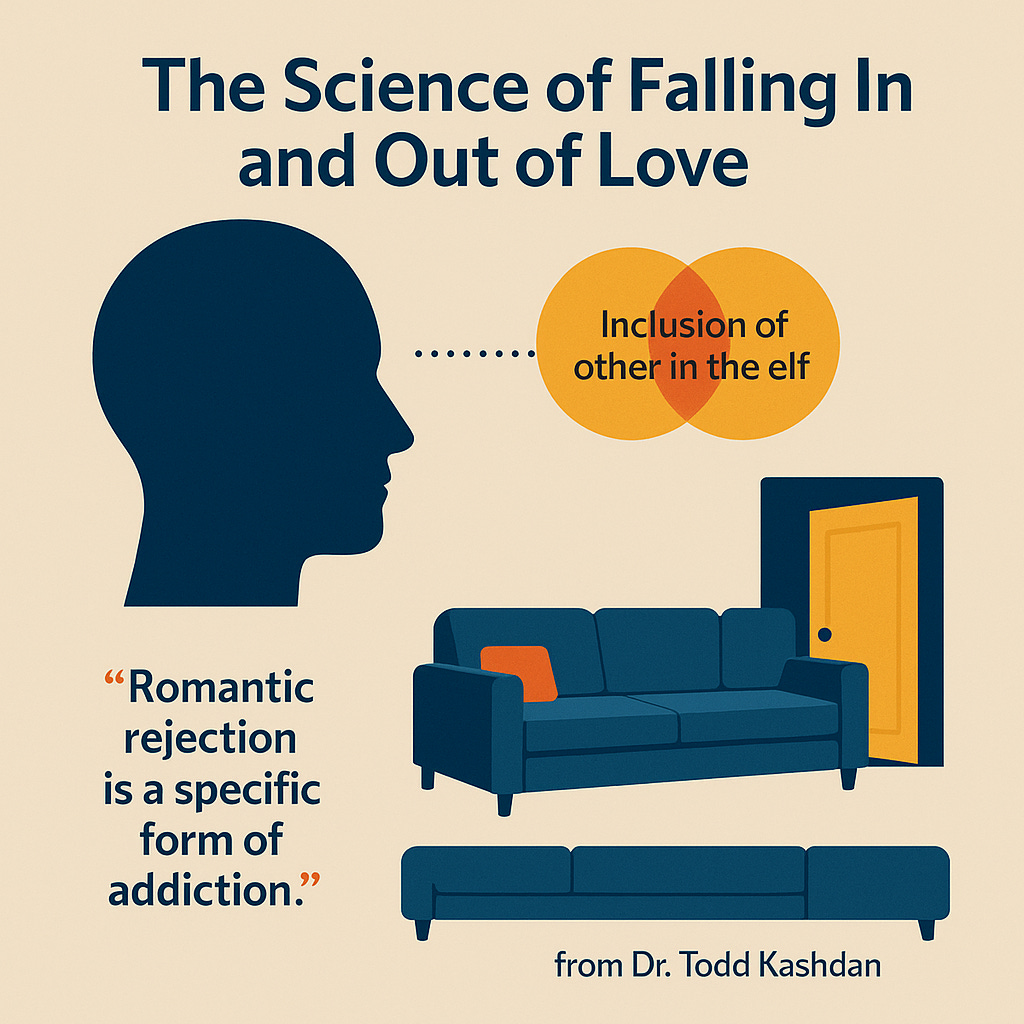
In studies tracking adults over 10 weeks (link), those who fell in love exhibited measurable changes in their self-concept: their sense of who they are.
After falling in love, participants demonstrated greater diversity in how they described themselves. Their self-efficacy increased. Their self-esteem rose. They literally became more.
We are drawn to romantic partners partly because close relationships allow us to incorporate the other’s resources, perspectives, values, fantasies, hopes, fears, memories, passions, and identities into our own sense of self. When we love our partners, we include them in who we are.
This is why relationships feel expansive when they’re working. And why breakups feel like dismemberment.
What happened when scientists turned their fMRI scanners on people who had recently been dumped but still felt intense love (link)? The brain regions activated by romantic rejection overlapped significantly with regions activated by cocaine craving.
“Romantic rejection is a specific form of addiction.” The brain doesn’t distinguish between wanting another hit and wanting them back. Activity intensified in brain regions associated with physical pain:
“The difference between a toothache and intense rejection is the toothache goes away after you get to the dentist. With rejection in love, you can feel that pain for months, maybe sometimes years.”
When people say their heart is breaking, they’re describing brain activity with surprising accuracy.
Compared to relationships that end gradually, research shows that sudden breakups, the kind that arrive without warning, are particularly devastating…