
How to Manufacture More Time in Your Life!
Time Extension Self-Efficacy: Ugly Jargon for Something Wonderful
Provoked is for playful, intelligent, discerning readers. If you like what I’m doing and want to support this work, join for free or upgrade with benefits.
She wakes at 5 a.m. without an alarm, on purpose, as one more self-inflicted punishment for entering the adulting phase. For most of us, when an eye opens at 5 a.m. you might as well be pissed off and crying because it usually due to something that sucks like a colicky kid (I am looking at you Chloe Kashdan), a red-eye flight, a defective bladder, or a deadline you mishandled.
I did not decide to become a morning person. Nobody sane decides that. My girlfriend and I would talk late, I would want to keep talking, and around 9:45 her head would get heavy and her sentences would get shorter, and by 10 she was gone, not rude-gone but near oblivion the way a phone at 4% is finished. If I wanted to stay in her orbit, I could get a tiny section of text or phone time with her….but it had to be at the godforsaken early hours. So my bedtime crept back from somewhere disgraceful toward 10 and my alarm crept forward, and one morning I was awake before the sky was, doing some trunk rotations between the sheets (G-rated) as my phone lit up with her texting from a kitchen across state lines.
The exchange was ridiculously flirty. Little jabs, a photo of her half-eaten cookie that was supposed to represent XXX, and a countdown to when she had to leave. Seven minutes of it, and then she was out the door and I was lying there with an entire morning to relish. A pleasure captured beautifully by Chuck Klosterman:
“Why do we get out of bed?” Mitch wondered. “Is there any feeling better than being in bed? What could possibly feel better than this? What is going to happen in the course of my day that will be an improvement over lying on something very soft, underneath something very warm, wearing only underwear, doing absolutely nothing, all by myself?” Every day, Mitch awoke to this line of reasoning: Every day, the first move he made outside his sheets immediately destroyed the only flawless part of his existence. He could still remember the spring of 1978, when he (along with over half of his fifth-grade classmates) contracted mononucleosis. It was the best month of his life.
Yummmmmmm, mono, on a weekday!
What mattered was the slab of time that I used to be unconscious, and guarded myself against, that I now experienced with a surge of meaning. I read (LINK to The Better Mother authored by my neighbor). I wrote articles that I cared about without fatigue. I walked the dog while the streets looked like a scene from The Day After. I worked out at my gym and found a new cast of uber-healthy, extra cheery, insanely fit characters.
I was ready to file the entire experience under new relationship makes middle-aged man temporarily insufferable. Then I uncovered a scientific study that described my psychological upgrade.
The hour you believe you can take
The study is titled, “Can I extend my day? The impact of chronotype on organizational citizenship behaviors via time extension self-efficacy.” The researchers introduce a construct called Time Extension Self-Efficacy, TESE for short. TESE measures whether you believe you can extract more moments in a given day, off the books, without asking for administrator access. Two people can possess an identical twenty-four hours and feel like they live in different economies because one of them is certain that a 5 a.m. or an 11 p.m. is hers for the taking, and the other runs into the edges of the day with dried, crusty contact lenses itching for removal.
A big chunk of this belief stems from chronotype, which is normally minimized into the categories of whether you are a morning person or a night owl. Your chronotype dictates which parts of the day feel like doorway portals and which are a closing vise.
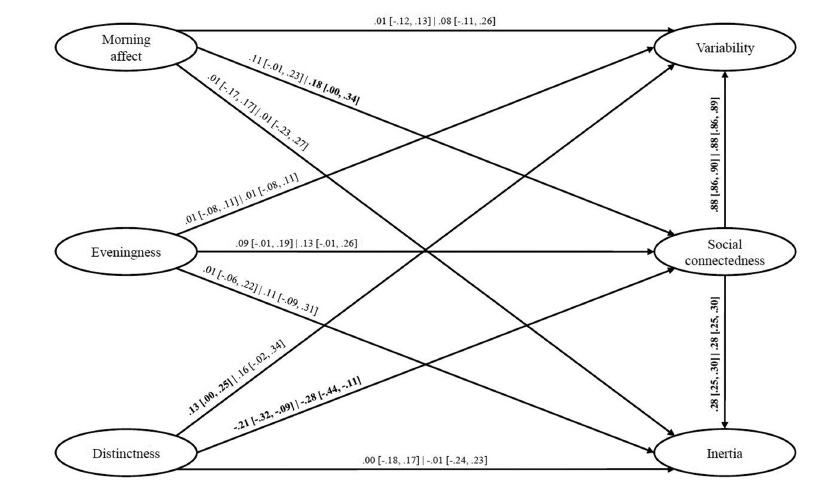
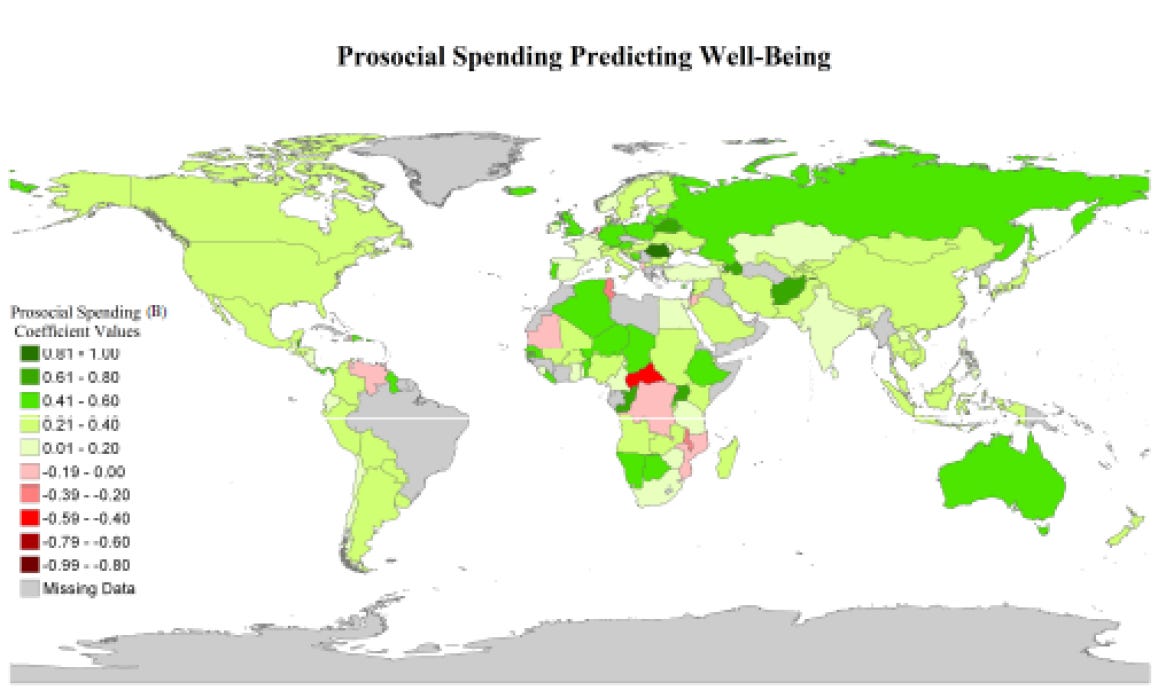
The researchers then connect TESE to organizational citizenship behavior, which captures the unpaid, thankless crap nobody puts on your annual work performance review until you stop doing it and everybody suddenly realizes you are essential. This might be mentoring the new hire nobody assigned to you, staying twenty minutes late fixing a problem you didn’t create and will get zero credit for fixing, or planning a retirement party for someone who is older and thus often ignored by the oh-so-cool young folk. The coolest finding, however, buried under regression tables to bore teenage boys into a coma, is that time works like currency you can print at home if you believe the printer is plugged in, and the people who believe they can do this turn around and spend this new found resource on other people. And there is plenty of research showing this is the most reliable way to boost your well-being no matter what World Cup team you root for:
TESE benefits even get stronger in people who score high on what they call communion striving, which basically means you are the kind of person who cannot walk past a coworker drowning in a spreadsheet without offering assistance, you absolute sucker. I will spare you the interaction plot of the moderation effect. You are welcome.
Then the twins kicked the door in
Everything I have described about the benefits of transforming from an evening into a morning chronotype because of a girlfriend happened because I was holding the controls. I chose to drift into sleep earlier. I chose to find social opportunities with the one who makes me crack up the most in the morning. A voluntary time extension feels like wealth, because you stretch the day and pocket the surplus. That is exactly the condition TESE needs, the belief and the reward confirming each other on your terms.
Run that same mechanism backward and you get my late thirties.
Nineteen years ago my twin daughters arrived. I adore them. They are the center of my universe and I would walk into I-95 Florida traffic for either of them without breaking stride. That said, the twins detonated my relationship with time. A 3 a.m. opened eye socket was a door kicked in. The morning was triaged before my feet attempted a squiggly yoga mountain pose. My work suffered, my marriage cratered, and there are phone call messages to my childhood friend Martin confirming a level of exhaustion akin to tripping balls.
The real wellbeing question is who holds the dashboard when your day stretches or snaps back. A morning I steal at 5 because I am swooning for someone is the same sixty minutes stolen from me at 5 by a colicky infant, as the two sit at opposite ends of human hedonic experience. If I were designing the next study, I would put internal sense of control at the center of the model and observe TESE bend around it.
My bet is that the efficacy belief only pays out when a person believes the extension is hers to start and hers to stop. Take away the off switch and you do not get a colleague who helps at dawn. You get a parent of newborns staring at the ceiling, rich in hours and bankrupt in agency, wondering why anyone offers congratulations for a child until after you can confirm their temperament can be described as really fucking chill.
Whose hand is on the clock
Most advice about time is about getting more of it, which is the wrong target. You can win an extra hour and resent every minute of it, and you can lose an hour and barely flinch, depending entirely on whether it feels as if you are the author of the story.
I got lucky. A woman who likes sunrises offered me extra hours that I now treat like one of those deranged treasure candles, the kind where you light the wick thinking you bought lavender serenity and later, some tiny object starts clanking around in the wax like a drunk pirate left you a message. You do not know what is buried in there. A joint? A set of AirPods? A small metallic reminder that there are free periods previously neglected for the taking?
You do not have to wait that long, and you do not have to lose what I lost when two people in tiny socks took the reigns and kept them for the better part of a decade.
How You Can Support the Newsletter
If you like Provoked, there are several ways to support me.
Subscribe! Don’t miss an issue. Upgrade to paid for extra benefits.
Share. Email it to friends or post it on social media.
Todd B. Kashdan is the author of several books including The Upside of Your Dark Side (Penguin) and The Art of Insubordination: How to Dissent and Defy Effectively (Avery/Penguin) and Professor of Psychology and Founder of The Well-Being Laboratory at George Mason University.
I love your concept of manufacturing time. I think many of us who have had children have walked that same pathway. I could talk a month of Sundays about the many years when my son was very young.
I set the alarm clock for 3:30 A.M. so that I could exercise for an hour, do paperwork, go to the hospital nearby for a therapy session with someone, go back home, get my colicky son up and organized, and be at my office only two minutes from my home. My first private practice client was at six A.M. I’d see two clients and then go home to feed and then take my son to the baby sitter and later Montessori school. He was extremely sickly and in and out of the doctor’s office. So many times people wondered if I was having an affair with the pediatrician. True story. As a natural morning person it wasn’t hard to stretch the morning to an earlier getting up time. People thought I was nuts to do it. And you bet I went to bed by nine P.M.
My son never slept through the night routinely until he was in kindergarten. Poor dear. I was exhausted but I always felt grateful I was able to stretch that early morning rubber band backwards. I truly didn’t mind. It learned to be a habit. I felt how lucky I was to be able to figure out a routine I could manage.
Todd, I can’t imagine you had twins to manage. If my son had been twins no way I would’ve been able to pull it off. My hat goes off to you.
When I think about those days, it did not seem like a challenge. It was more a choice. I was not supposed to be able to have kids, so when I got lucky and had one, I would’ve done anything to make a career and parenting work. Huge meaning, purpose and happiness all rolled into one.
The biggest challenges were his health issues, but they taught me a flexibility, about changing my schedule and meeting serious challenges, which I have always enjoyed. That said, those years were some of the hardest of my life, but they were also the most rewarding. My son and I are extremely close. He is 47 now but it seems like yesterday. I still feel early mornings are one of my greatest blessings, and I savor every minute. Maybe I’m weird, because I like getting up in the dark, and I love watching the sunrise.
Much appreciated, Todd.
Now that I am older (61) I see that some things which used to be negotiable are not. If I do not get enough sleep, I have to call in sick to work and I am not even kidding. When I was 40, if my dog (or child) woke me 3 times puking, I'd go to work the next day. At 60? Sorry. Reschedule everyone.